
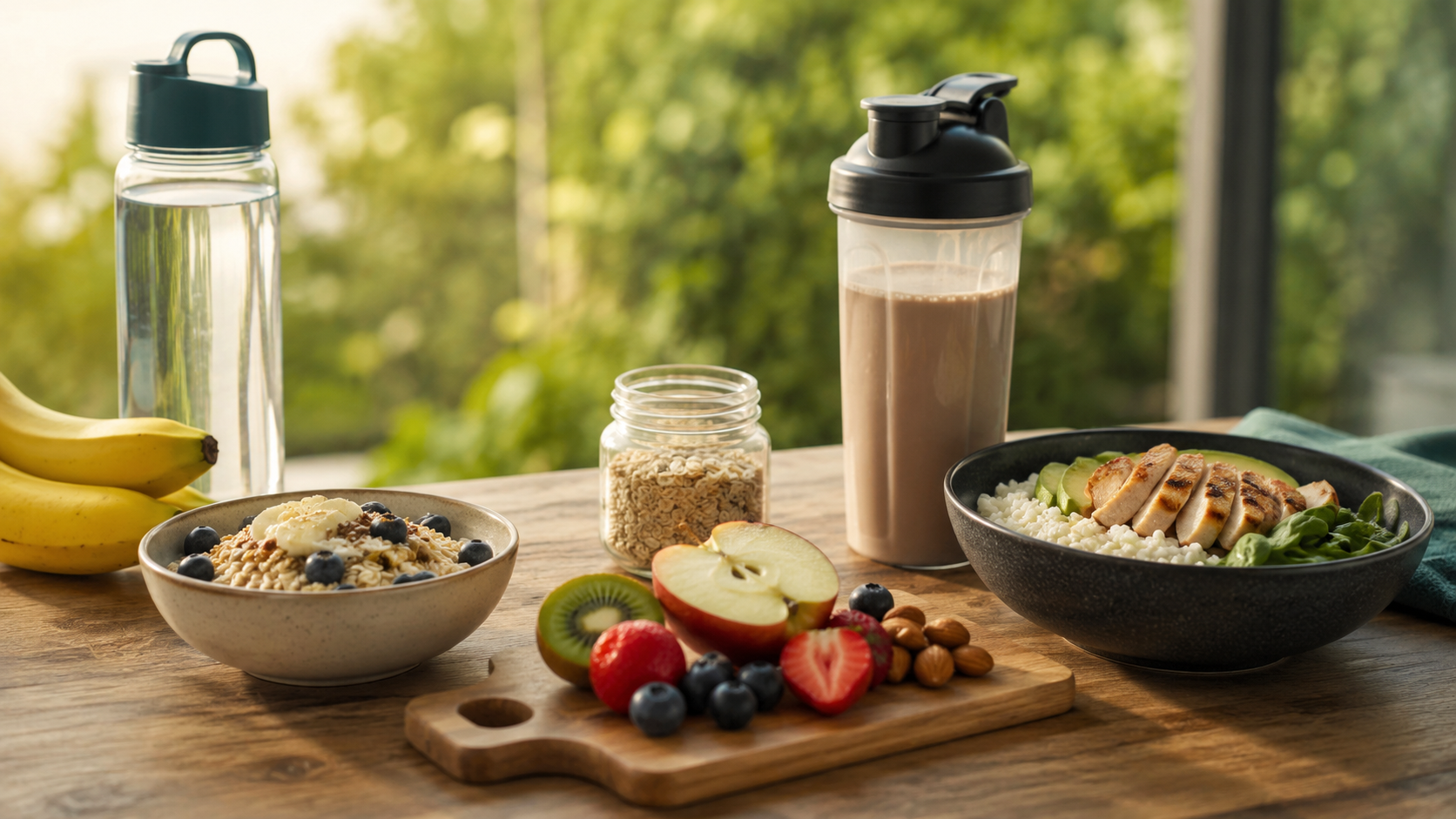
Fueling does not need to be complicated, but it should match the session. What works before a short easy run may not be the best choice before a heavy lifting session, an interval workout, or a demanding mixed-modal training piece.
Before training
Pre-workout nutrition should support the session without upsetting digestion. For many people, that means a meal or snack built around easy-to-tolerate carbohydrate, with the amount adjusted to the training type, session length, and time available before exercise.
During training
Not every session needs intra-workout nutrition. Short or lower-intensity sessions often do not require it. Longer sessions, harder endurance work, or multiple demanding efforts may benefit from fluids and carbohydrate support.
After training
Post-workout nutrition helps restore energy and supports recovery. Carbohydrate helps replenish what was used, while protein supports repair and adaptation. The exact meal does not need to be complicated; what matters most is that it is practical, repeatable, and appropriate for the session.
Hydration matters too
Hydration is part of fueling. Sweat losses vary a lot between athletes and environments. Paying attention to thirst, session duration, weather, and your own response is more useful than blindly copying someone else’s plan.
Practical rule
Match the size and type of food to the training demand. Bigger or harder sessions generally require more planning. Shorter or easier sessions often need less. Simple, well-tolerated habits beat perfect-looking nutrition plans that you cannot sustain.
Bottom line
Good sports nutrition is not about eating like a professional athlete on social media. It is about making smart decisions that support the work you are actually doing.