
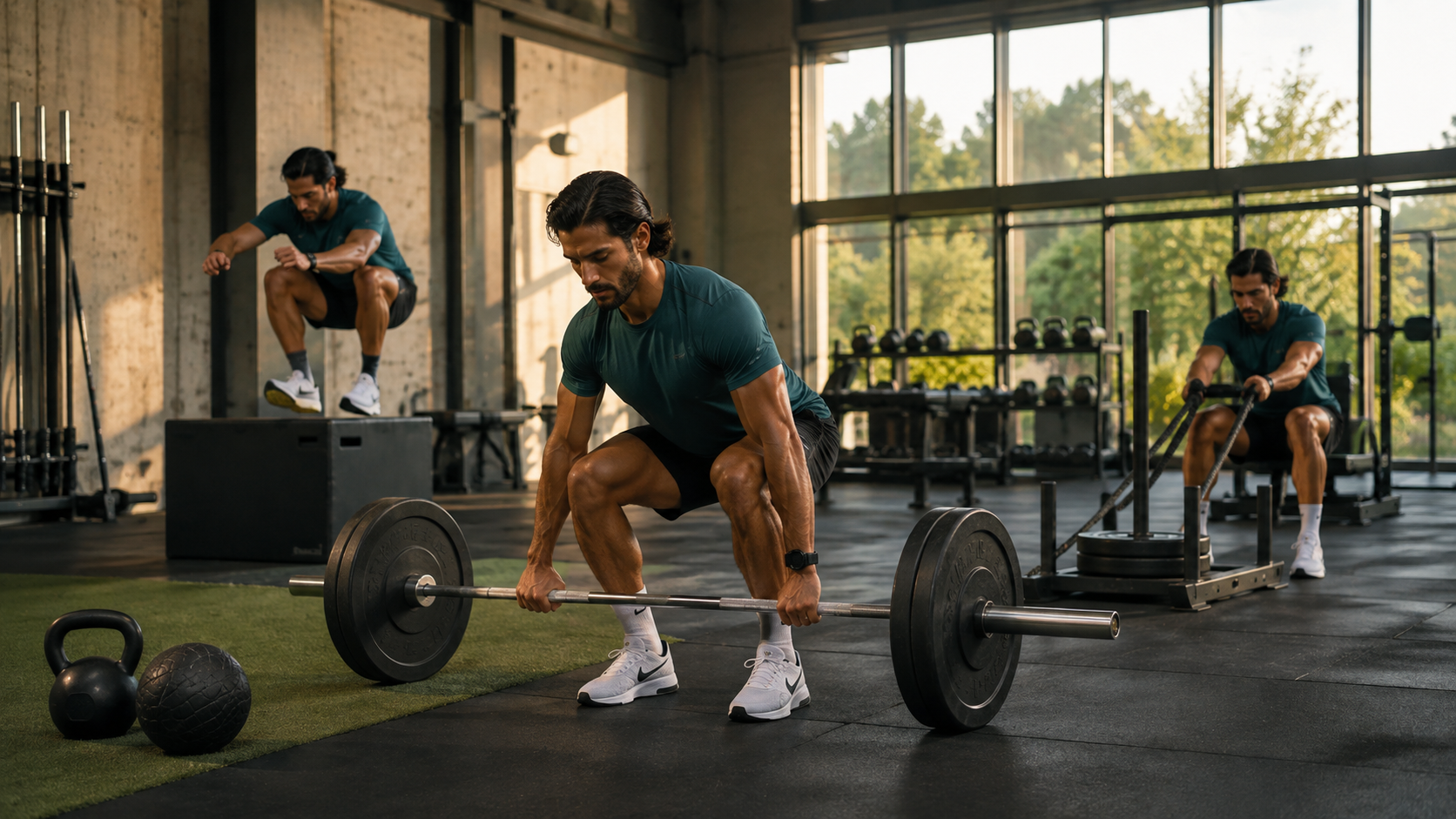
Strength, power, and conditioning are often used together, especially in CrossFit-style training, but they are not interchangeable. Each quality has a different role in performance, different training characteristics, and different fatigue costs.
Strength
Strength is your ability to produce force. In practice, this is often developed with controlled resistance training using movements such as Back Squat ↗ or Deadlift ↗. Strength work usually uses heavier loads, longer rest, and a high emphasis on position and mechanics.
Power
Power is the ability to produce force quickly. Olympic-lifting derivatives and dynamic movements such as Clean ↗, Snatch ↗, or Thruster ↗ train this quality. Power work usually relies on speed, intent, and good timing rather than slow grinding reps.
Conditioning
Conditioning refers to the body’s ability to sustain and repeat work. It is not only “cardio,” but it often includes cyclical work, mixed-modal workouts, and sessions that challenge energy systems and movement efficiency over time.
Why the difference matters
If everything becomes high-intensity conditioning, you may miss the slower, more technical work needed for true strength and power development. If everything becomes heavy lifting, work capacity may stagnate. Good programs give each quality its own space.
Programming in practice
Many balanced plans organize the week so that heavier strength work, explosive technical work, and conditioning pieces each have a purpose. That keeps adaptation clearer and helps fatigue stay more manageable.
Bottom line
Strength helps you produce force, power helps you apply it quickly, and conditioning helps you sustain work. They support each other—but they still need to be trained with different intentions.